
This "Blue Monday" Isn't Depressing
But the story behind it is curious

How is it mid-January already?
We are just days away from the marketing creation that is “Blue Monday” — aka the most depressing day of the year.
But as I dug into the myth of “Blue Monday” in Curious Minds last year, I thought now was a good time to share the story of a different “Blue Monday” — the song by New Order.
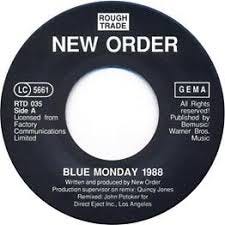
The British band New Order was a bit before my time, but I’ve known their music for years.
Their song Thieves Like Us was in Pretty in Pink after all!
(Every time I hear it, I picture Molly Ringwald and her sewing machine).

And years ago, a friend told me casually that New Order lost money on Blue Monday.
I had never heard that before —I always thought Blue Monday was a big hit, at least in the UK.
So how did it lose money?
I was curious…
The story of Blue Monday begins in 1982, when the band New Order decided to create a song that was completely electronic.
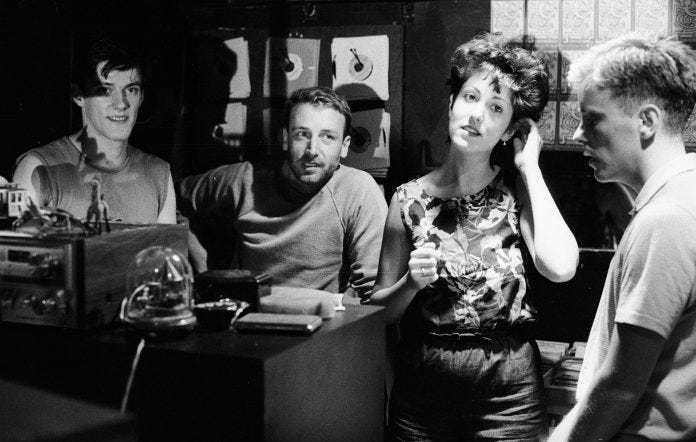
Inspired by the sounds they’d heard in New York clubs, they used sequencers and an Oberheim DMX drum machine to create a synth pop dance track “with a hint of melancholy.”
They called the track “Blue Monday.”
The song clocked in at a radio-unfriendly seven-and-a-half minutes, and was released on 12” vinyl on March 7, 1983.
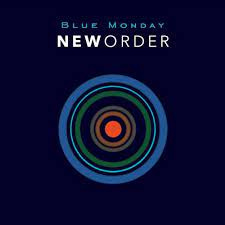
And the sound of Blue Monday wasn’t the only thing that was unique about it.
The album also had an unusual cover, created by graphic designer Peter Saville.

Saville had been inspired after a visit to New Order’s studio in Manchester, England.
While he was there showing them an idea for the cover of their forthcoming album Power, Corruption and Lies, something else caught his eye.

“I picked up an interesting object and asked: ‘Wow, what is this?’,” Saville remembered in a 2013 interview.
The object Saville was admiring was a computer floppy disk.

“I'd never seen a floppy disk before. I thought it was great,” he said.
Saville asked if he could take it with him, and drove back to London listening to a cassette of New Order’s new song Blue Monday, with a floppy disk lying in the passenger seat.
Inspiration struck Saville on that journey, and when he got off the motorway in London, he knew what he would design for Blue Monday’s album packaging.
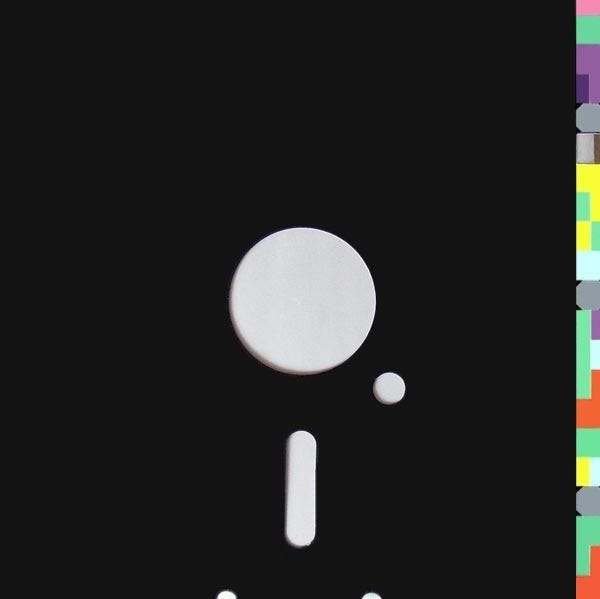
“I knew the sleeve would replicate a floppy disk, with three holes cut in it through which you could see the metallic inner sleeve,” he said.
“The only information I had to impart were the words ‘New Order’, the song titles (including B-side The Beach) and the Factory Records catalogue number.”
“I decided to do this with a column of coded colors, to provide some mysterious data, so I sat down with some pencils and used a different color for each letter.”
Saville’s mysterious color coding system can be seen on New Order’s 1983 album Power, Corruption and Lies.
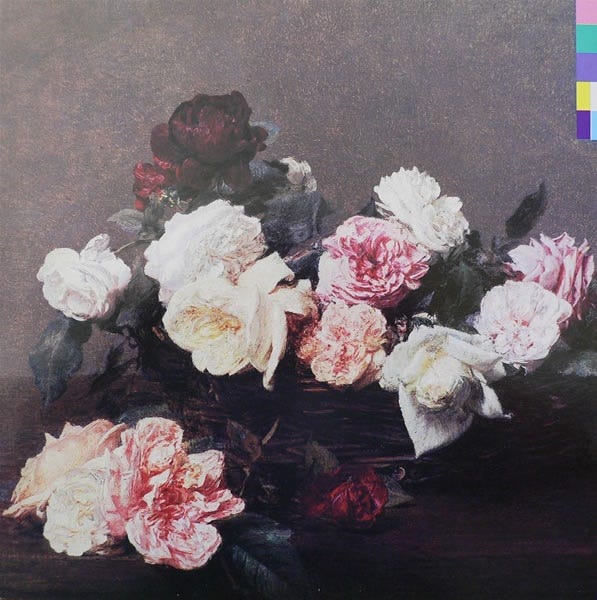
Taking inspiration from the classical painting A Basket Of Roses, by Henri Fantin-Latour (which features on the album cover), Saville broke down the individual colors the artist used and created a “color wheel” that can be seen on the back cover of the album.
“The color alphabet came from the fact that I understood the floppy disk contained coded information and I wanted to impart the title in a coded form,” Saville explained.
“Therefore, I converted the alphabet into a code using colors.”
There are 26 sections in the color wheel, and each section represents a different letter of the alphabet. The first nine colors represent numbers (as seen below).
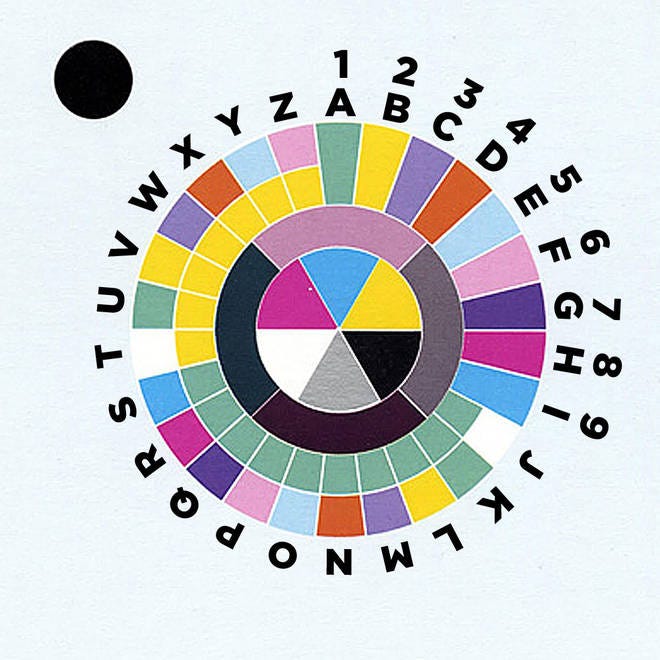
Cracking Saville’s color code on the Blue Monday sleeve reveals the name of the single, the B-side, and the band’s name.
The front cover reads:
F A C 73
B L U E
M O N D A Y
A N D
Then the flip says:
T H E
B E A C H
N E W
O R D E R
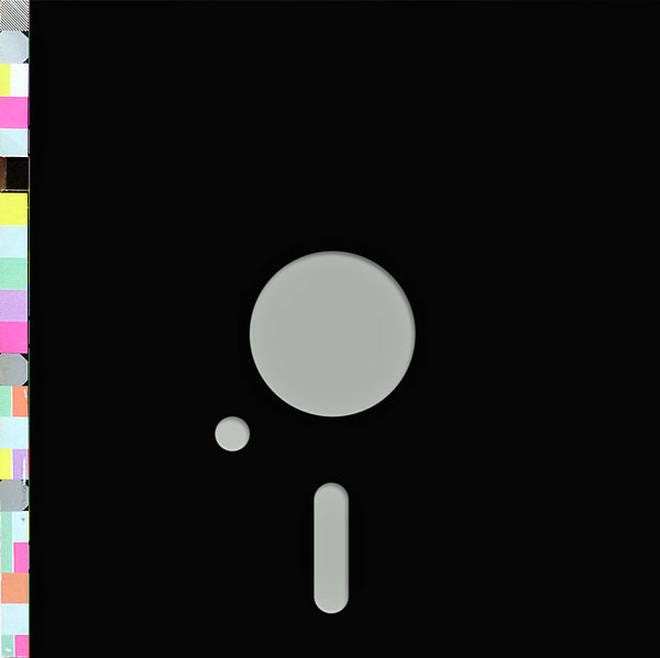
And it wasn’t just Saville’s color coded messaging that was complicated.
The creative album sleeve had to be die-cut three times to look like a floppy disk – which made it “ridiculously expensive” according to band member Peter Hook.
Factory Records boss Tony Wilson said the album was so expensive to produce that for every album sold, the label lost 5 pence.
Others have put this figure higher, saying the intricate album sleeve cost the record label as much as 10p for every album sold.
No one knew that Blue Monday would sell over a million copies in the UK alone.
The record sold so quickly that the printers struggled to keep up with demand.
A cheaper (and simpler) black sleeve that did not have holes was printed as well.
“I don't know how many thousands were sold that way, or whether Factory were charged the full price for something they didn't get, which would be very Factory,” Saville said about the infamous indie record label.
Factory would go broke in 1992, but Saville disputes that his design for Blue Monday cost them thousands of pounds.
“Factory never talked budgets. Nobody ever said to me: ‘This is a costly sleeve.’”
The story of the costly sleeve (and Wilson’s response to it) was included in the 2002 film 24 Hour Party People:
But Saville believes claims of the expense of the album may have been exaggerated by the Factory boss.
“Tony Wilson was a great exponent of ‘Print the myth’,” he recalled.
“I thought someone would adjust the price to compensate. But I don’t think that anybody knew the price of the Blue Monday sleeve until they got the bill.”
While the specific printing costs are debatable, Peter Saville Associates charged Factory £538.20 for the design.
Blue Monday would usher in a new era of music, and spend 38 weeks on the UK charts, reaching the No. 9 spot.
A remix of the song by Quincy Jones hit No. 3 in the UK in 1988. It would only reach No. 68 on the US Billboard charts.
So did Blue Monday lose money?
Well, as Factory did not keep meticulous records, it’s hard to say definitively.
But the creative song with the elaborate album cover would go on to become the biggest selling 12” album of all time.
So if Factory lost money on each copy they sold, it’s safe to say they lost a lot of money.
But the story of the Blue Monday album cover and the magic of the song live on.
Check out the music video for Blue Monday below — and see if it makes you want to dance…
Speaking of music from the 1980s…
All my 1980s music searching threw this clip into my feed.
I hadn’t heard this song in a LONG time, but listening to it is 4 minutes well spent.

How Can I Help?
I’ll keep saying it: Communication matters.
If you want to improve your communication (and get all the good things that come with that), I’m your gal.
So many companies could reap significant benefits – from performance and culture to retention and engagement – by improving their communication.
So, if you know someone who could benefit from some help (as even the most seasoned leaders do), please get in touch and check out my website for more information.
You can also see my Top 10 list of what I can (and can’t) do for you here.
And if you see any communication examples (the good, the bad, and the ugly) that you think are worth analyzing or sharing, please send them my way!
Stay Curious!
-Beth

I loved this! Ta. :)