
School's Out ...for the Rodeo!
Spills, thrills, and Wild West Entertainment

Hello!
Did you grow up listening to the radio — or watching the local news — during the winter hoping to hear those magical words:

“School is Closed ”
Ah, Snow Days…
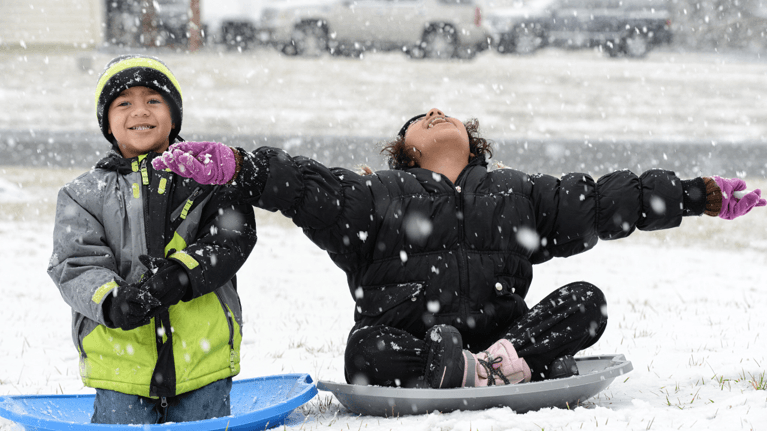
I have vivid memories of playing with my sister and the other kids in the neighborhood on a snow day.1
We’d drag our red sleds to Millie’s Hill and fly down, then climb back up and do it again.
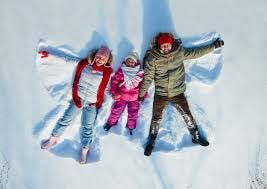
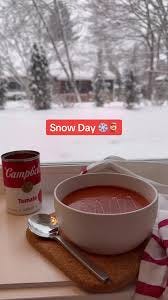
We made snow angels, and hot chocolate with Hershey’s cocoa powder and Kraft marshmallows, and ate tomato soup with grilled cheese sandwiches.
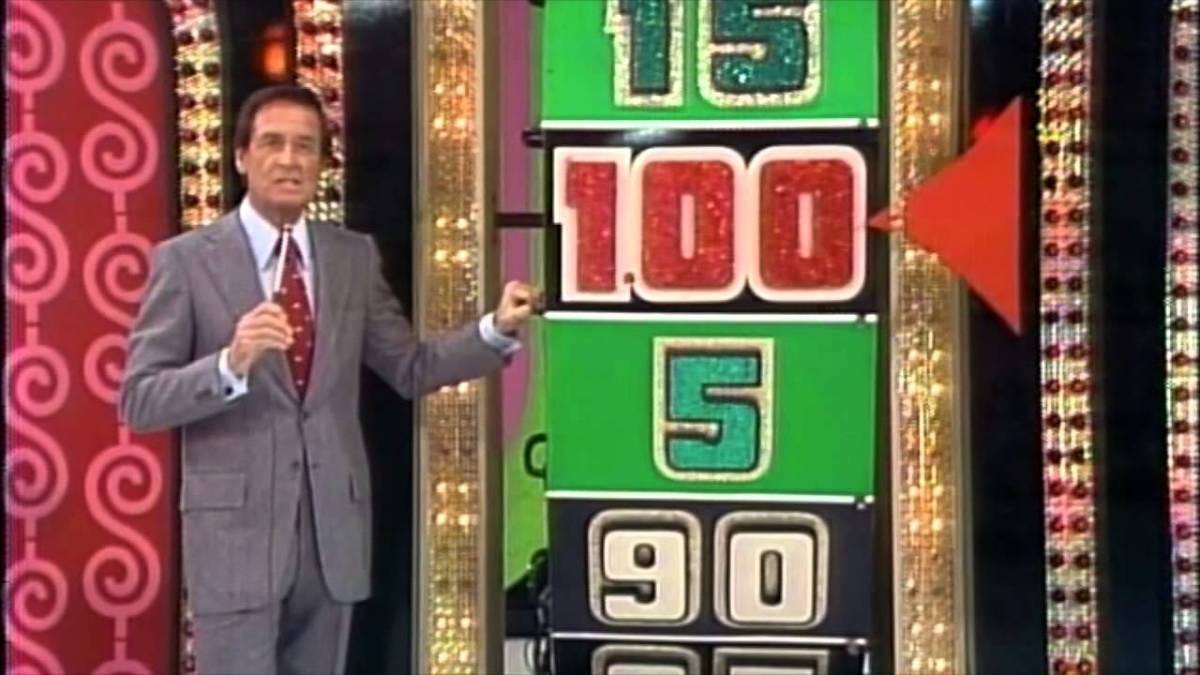
We guessed the prices of home goods as we watched The Price is Right on TV (when Bob Barker still had dark hair).
What a time to be alive!
But then some legislator realized that only two states in the U.S. did not have to make up snow days later in the year — Indiana (where I lived) and Hawaii.
That was the end of our carefree snow days, as after that we had to make up the days in May when it was (usually) sunny and nice outside.
But living in London, my kids will probably never know the joy of a snow days.
Kids in Arizona probably don’t get many snow days either — but they do get a different kind of break.
A “Rodeo Break.”
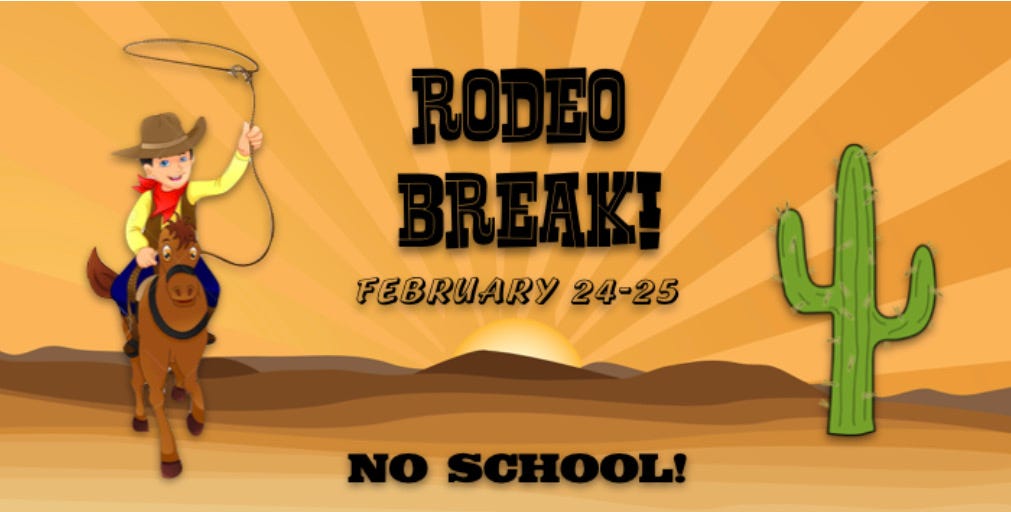
But where did Rodeo Break come from?
I was curious…
Like so many ideas, the Rodeo Break was created to solve a problem…
Though Tucson, Arizona has over a million residents today, back in 1924 it was a frontier town, with around 30,000 residents.
And the days of the Wild West weren’t that far behind it.
Arizona had only been a state since 1912.
The Grand Canyon had only become a national park (the country’s 17th) in 1919. And Route 66 wasn’t even completed yet.
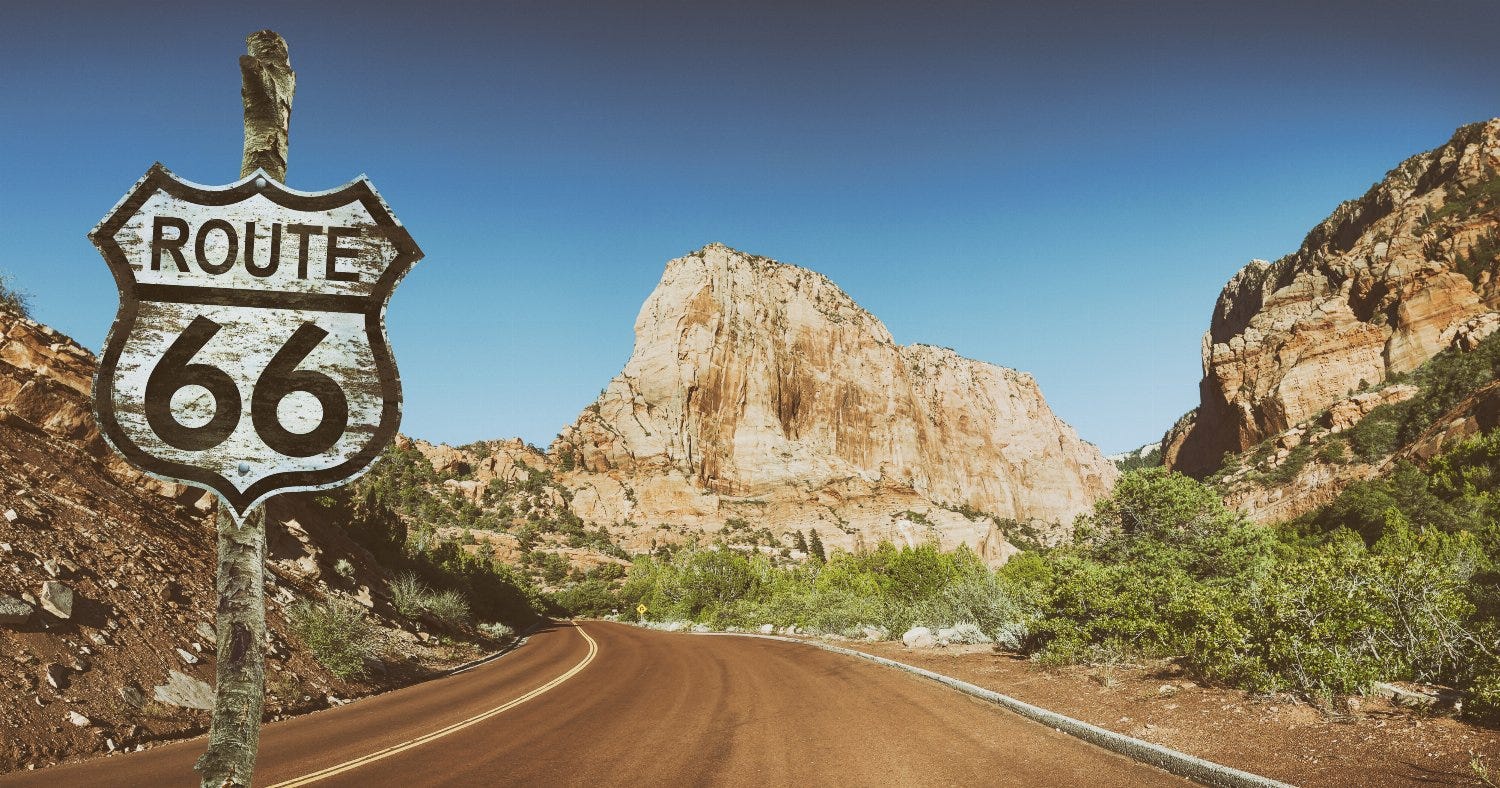
It was at this time that Frederick Leighton Kramer, President of the Arizona Polo Association, gathered a group of local businessmen to discuss a way of celebrating Tucson’s heritage — and attracting visitors to the area during the winter.
He suggested they have a three-day festival — with a rodeo and a parade.
At that time, many ranches and private schools in the area had rodeos, so some of the residents thought Kramer’s festival was unnecessary.
But he convinced enough people that there was merit to his idea, and plans were made for the inaugural ‘La Fiesta de los Vaqueros2’ (The Party of the Cowboys) in February 1925.
City leaders and The University of Arizona agreed the festival would be treated as a holiday, closing schools and many local businesses, so residents could take part in the events.
This was the first ‘Rodeo Break.’
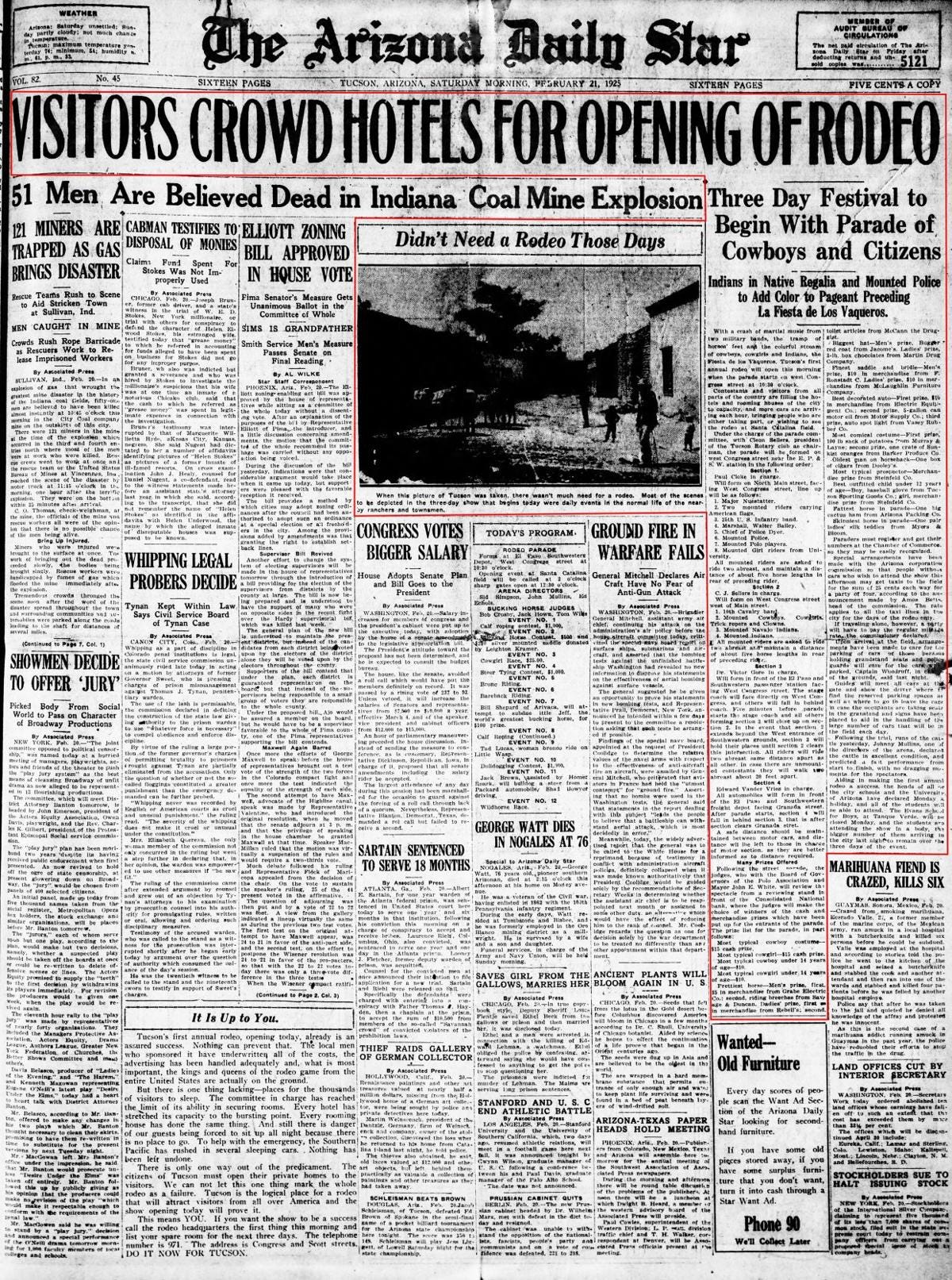
The inaugural Fiesta de los Vaqueros was held during the time of prohibition — so in the weeks leading up to the event, federal officials began cleaning up the city.
The Arizona Daily Star reported that ‘25 stills were captured’ and an ‘estimated 3000 gallons of moonshine were destroyed.’
The headline in the Arizona Daily Star promoting the Festival read:
“Cowboys are asked not to shoot up the town”
The Festival’s Rodeo featured four events — steer wrestling, steer typing, calf roping, and saddle bronc riding.
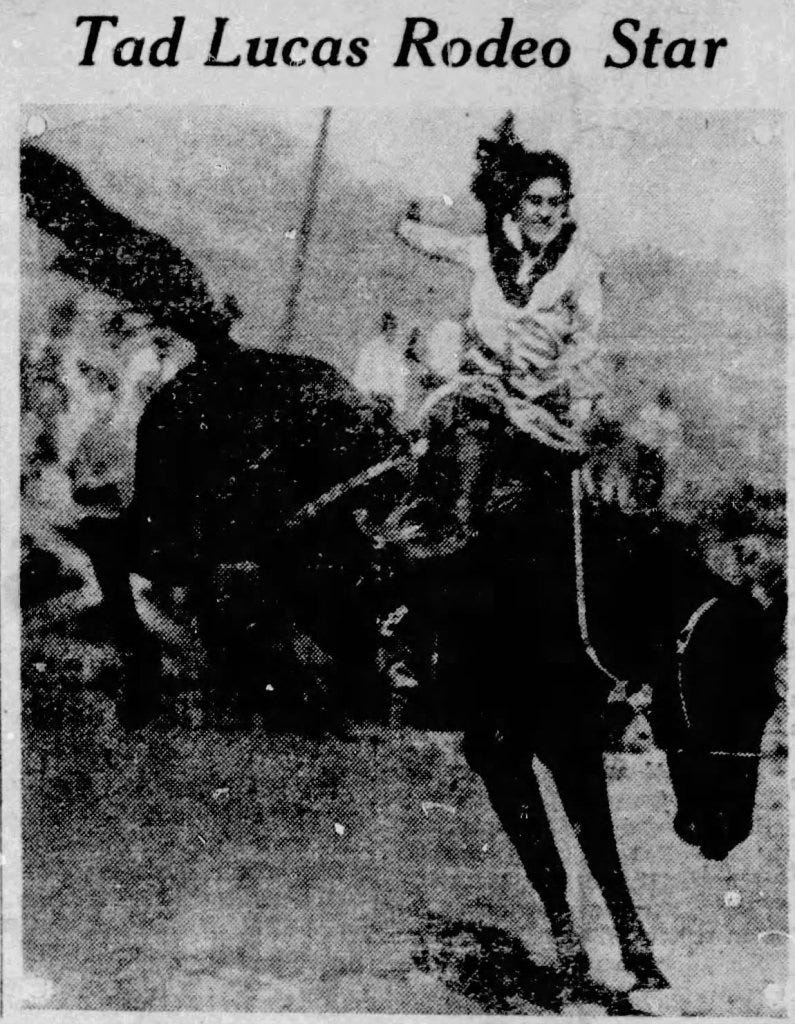
They also had special events, including a wild horse race, and the chance to see a ‘lady bronc rider’ named Tad Lucas (a future ProRodeo Hall of Fame member, who was still riding in her 60s).
In addition to the Rodeo, the Festival included an evening Rodeo Dance (attended by ‘tourists, cowboys, cowgirls, local society members, and Navajo Indians’) and a Rodeo Parade the following morning.
The first Rodeo Parade showcased 300 people, including ranchers or horseback, mounted polo players in uniform, and the 10th Cavalry and 25th Infantry bands. Thousands of spectators filled the streets to watch the parade.
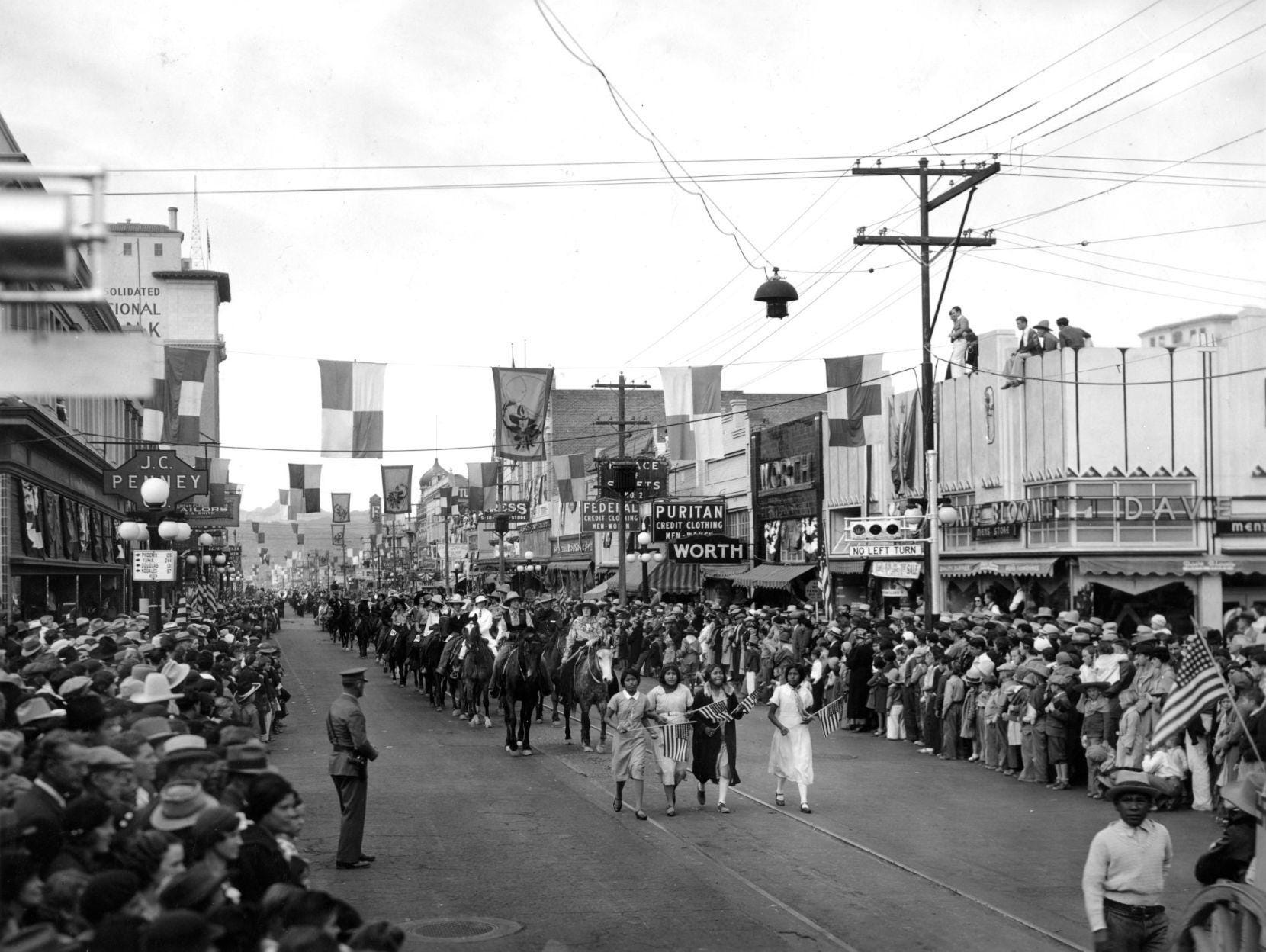
While the Rodeo participants competed for a purse of $6650, the parade also had prizes.
There were merchandise and cash prizes, including $15 for the ‘most typical’ cowboy and cowgirl costume, and a 100-pound sack of potatoes for the ‘most comical costume.’
The oldest man on horseback won a box of cigars, while the fattest horse in the parade received a ‘big cactus’ ham.3
And Tucson’s inaugural Fiesta de los Vaqueros was a success.
The Festival attracted visitors to Tucson in 1925 as Kramer had hoped, and the visitor numbers (and the Festival) grew over the following years.
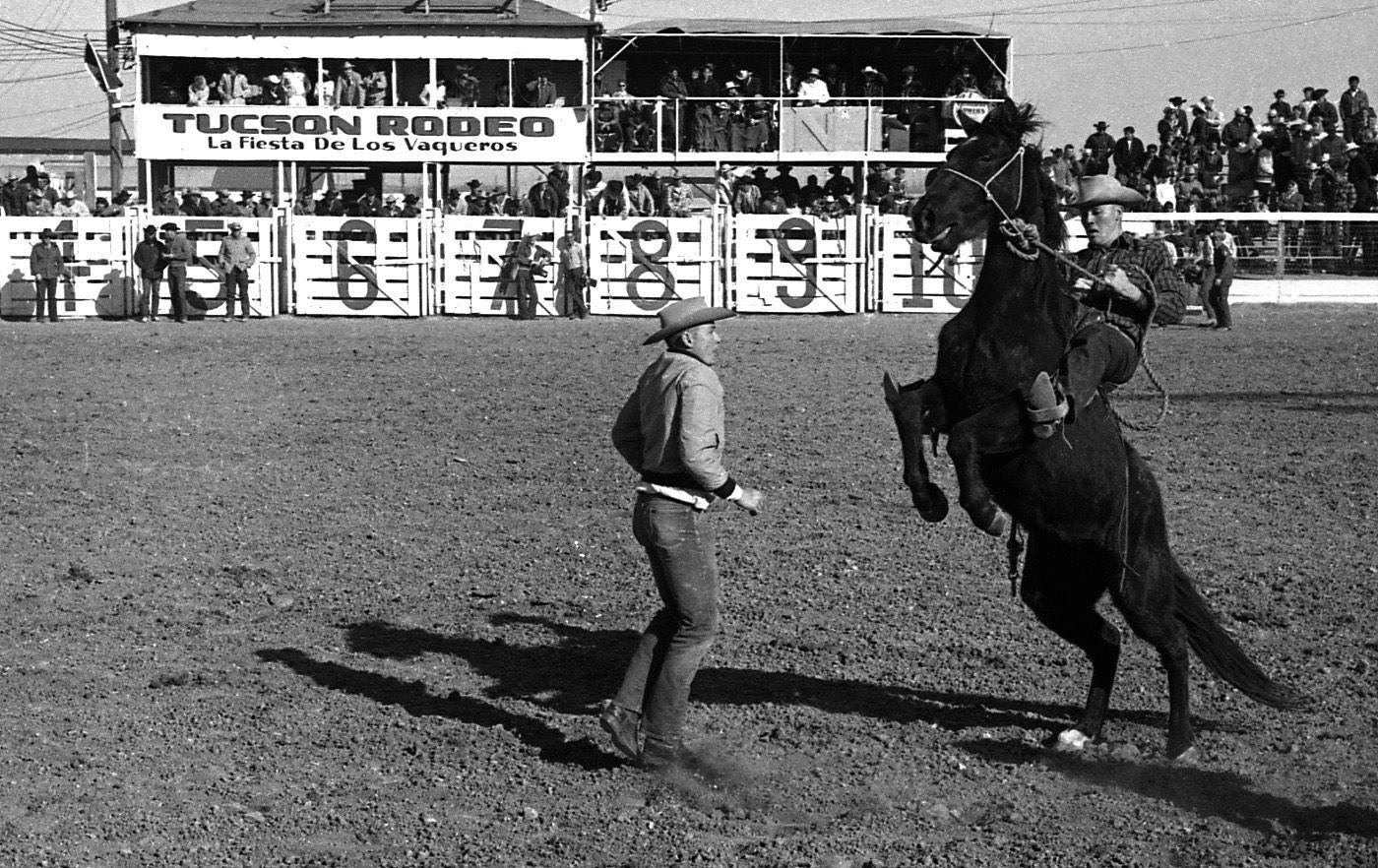
Seven years after the first Festival, the Rodeo moved to a bigger location with 3000 seats, and later to an arena at the Tucson Rodeo Grounds that could seat 11,000 spectators.
And 101 years later, the Fiesta de los Vaqueros and the Rodeo Break continue…
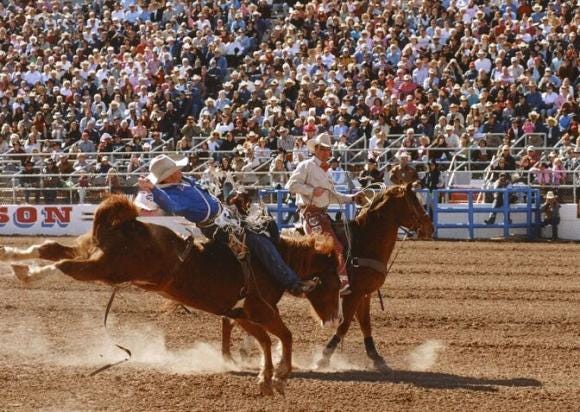
The Tucson Rodeo now includes cowboys and cowgirls testing their ranching skills in events ranging from barrel racing and bull riding to steer wrestling and team roping.
More than 650 contestants from all over the United States and Canada compete for more than $460,000 in prize money.
The eight-day event is one of the top 25 professional rodeo events in North America, and the first major outdoor event on the Professional Rodeo Cowboys Association schedule.
The Rodeo Parade, with its horse-drawn coaches, outfitted riders, folk dancers and marching bands, is now ranked as the world’s longest non-motorized parade.
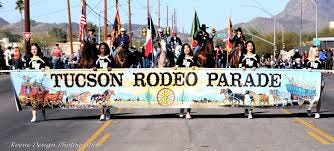
In recent years, the parade has included 200 floats and been watched by an estimated 200,000 spectators.4
But what is the Tucson Rodeo really like?
To find out, I spoke to Martta Eicher Rabago, a former Tucson resident who shared her fond memories of the Tucson Rodeo (and the school break that came with it) from the late 1970s to the early 1990s.
Martta told me that while there were other small rodeos and events at the county and state level, the Fiesta de Los Vaqueros (or Tucson Rodeo) was a significant event — and a significant part of their springtime activities.
“Many school bands marched in it. I marched in it, too. Generations of families would ride on hay wagons, in horse-drawn buggies or stagecoaches, or on horseback. There were also brightly decorated floats and Folklorico dancers with Mariachis performing,” she said.
“My favorite was watching the vaqueros, Mexican cowboys dressed in their finest bolero jackets and sashes, with silver conchos on their pants and belts. Oh, and silver spurs on their boots.”
“My childhood and teen years are filled with memories of the rodeo.”
Sally Bland Boice, who grew up in Tucson in the 1950s and 60s, echoed Martta’s sentiments.
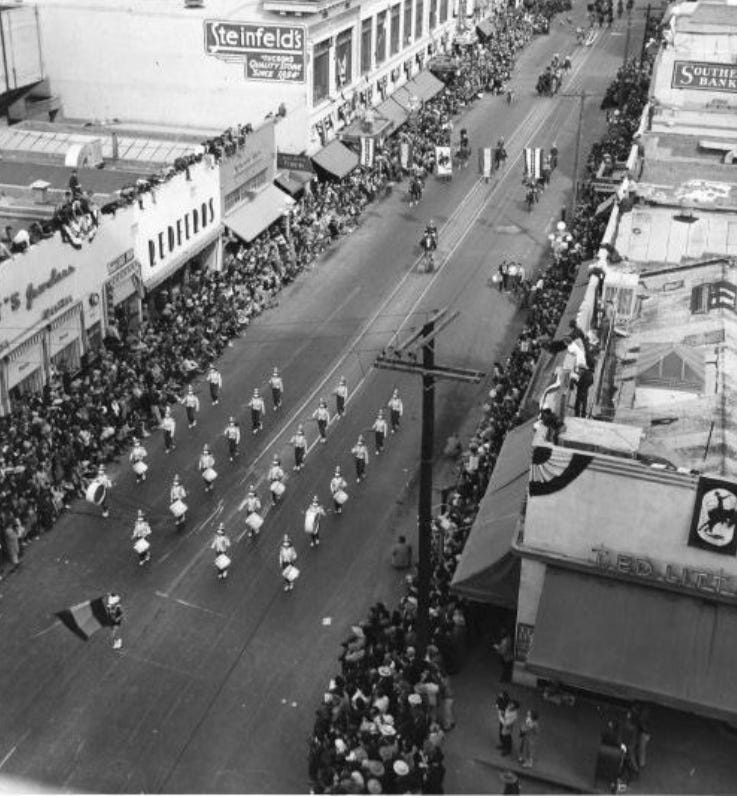
“The rodeo was part of the culture,” Sally said. “It was quite the tradition when we were kids.”
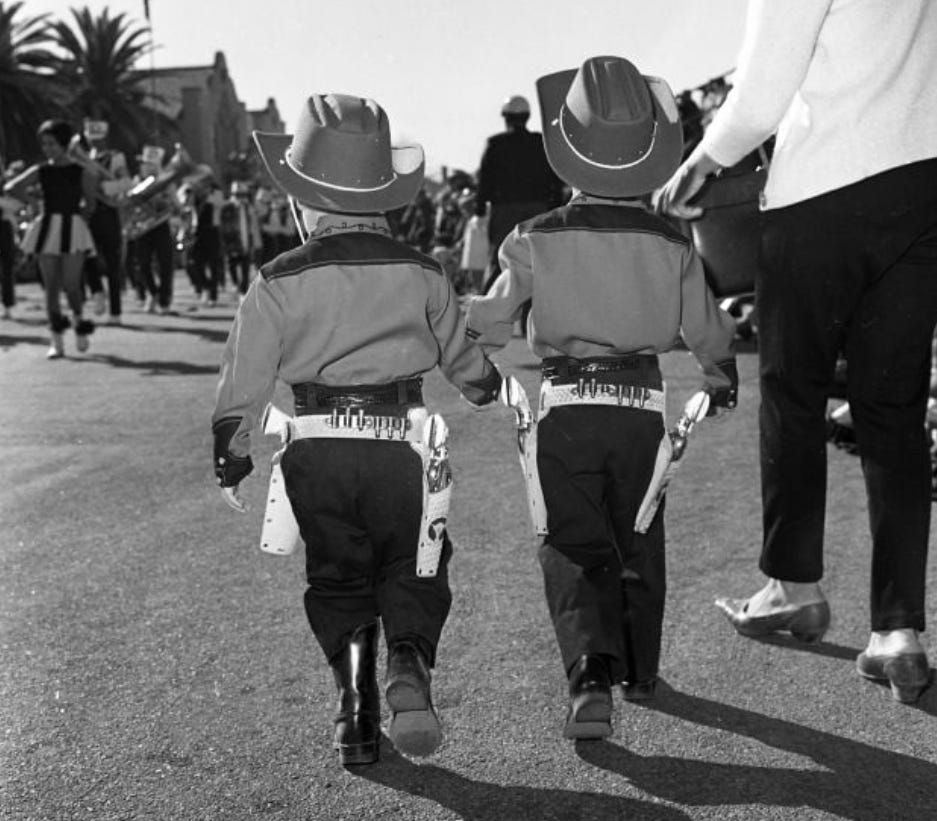
“Girls were allowed to wear long pants to school the three days before the festival. Of course, that was ‘back in the day’ when dress codes required girls to wear skirts and dresses. And most of the grade school boys wore holsters with play guns in them.”
“School was out Thursday and Friday, so everyone could go to the downtown parade on Thursday and to the rodeo, which continued through the weekend. High schools all had ‘Rodeo Queens’ who were also shown off during the parade.”
“We all probably loved it because we got to miss a few days of school.”
But what about now?
Over the years, some have questioned if the Rodeo Break is still necessary.
As Martta told me:
“For Tucsonans that are loyal to the community they still attend.
But the town has grown so much that outsiders don’t understand the significance.”
But judging by the Tucson Rodeo website, the city has big plans for this year.
And the Rodeo Break lives on — with schools in Tucson closing for two days this week to coincide with the Festival.
And residents and visitors a chance to celebrate the heritage of the Tucson area – just as they’ve done for more than a century.
(And I’m sure the kids don’t mind the break from school, either.)
One more thing…
The Tucson Rodeo has been featured on TV — including ABC’s Wide World of Sports in 1962 and ESPN throughout the 1990s.
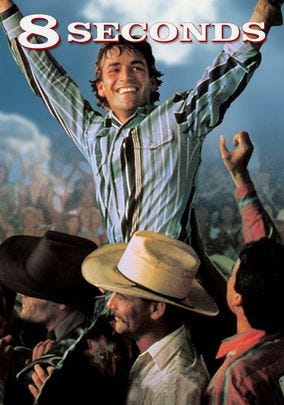
Hollywood has also used the Tucson Rodeo as a filming location for several films over the decades (from 1954’s The Lusty Men, starring Robert Mitchum, to the 1994 film 8 Seconds, starring Luke Perry).
Thank you Alexander May, for introducing me to the Rodeo Break — and sending me down the curiosity rabbit hole! And many thanks to Martta, Sally, my friend Brian and my uncle Frank who helped me gather insight on this story.
Curious About Working Together?
The same curiosity that drives this newsletter is what I bring to my work with leaders, teams, and companies — helping them communicate clearly, think creatively, and lead with confidence.
Curious? Check out beth-collier.com, and see my Top 10 list of what I can (and definitely can’t) do for you.
Stay Curious!
-Beth

Why do I want to capitalize this like it’s a proper noun?
If you’re listening to the audio version I recorded, can you pretend that I pronounced this correctly throughout? Thanks.
I cannot confirm what that was - if you know, please tell me! Could it have been a Texas Iberico Cactus-Fed Ham?
wonder if this is why Calgary Stampede is in July, lol. I've never been, just see a lot of coworkers on video calls wearing cowboy hats at the time